


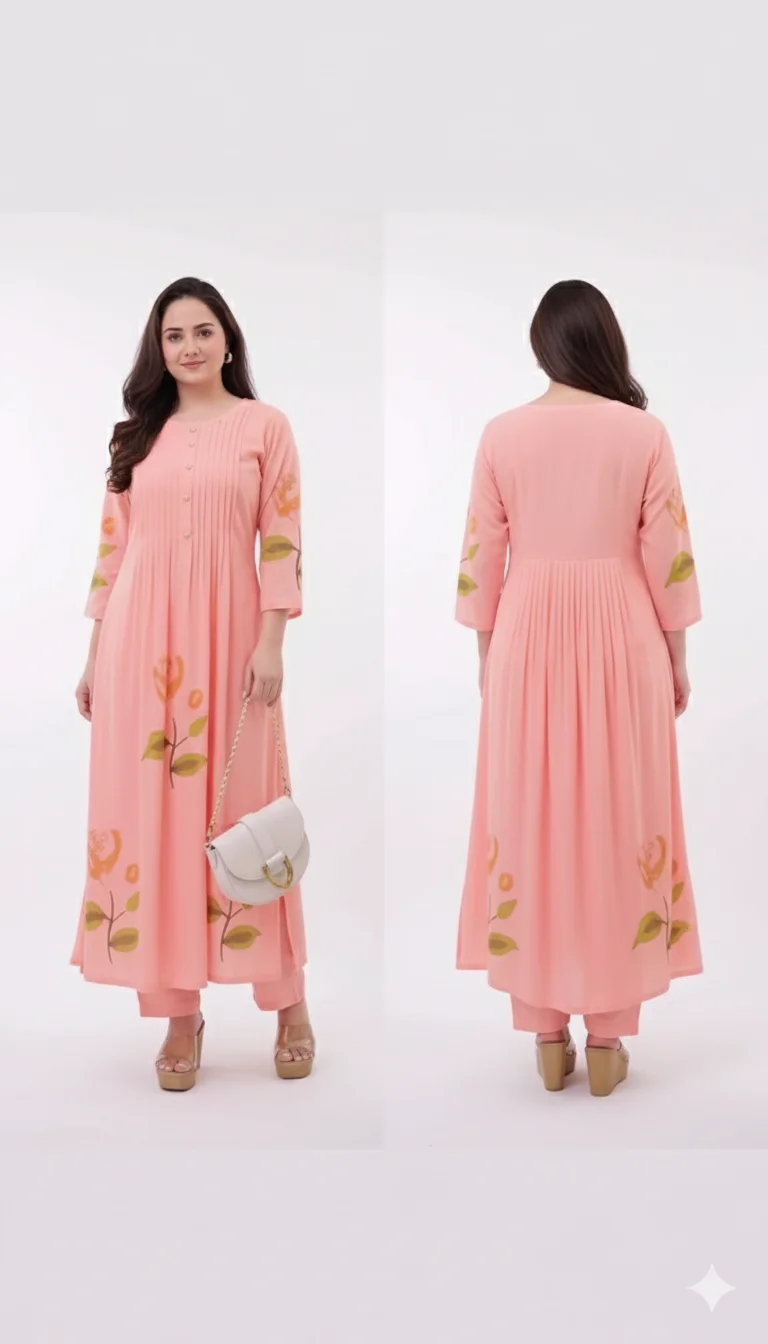

Hand-painted kurtis are like wearable art. Each piece is painted by an artist, so no two are exactly the same. Here is how to recognise them and keep them beautiful.
Popular hand-painting styles
- Kalamkari: from Andhra Pradesh; painted with a pen-like tool using natural dyes.
- Madhubani: from Bihar; bold lines and bright colours showing nature and mythology.
- Pichwai-inspired: detailed scenes with cows, lotuses and Krishna motifs.
- Free-hand florals: simple painted flowers and vines.
Hand-painted vs printed
- Brush strokes: visible, with slight variations in line thickness.
- Colour depth: paint may sit slightly on top of the fabric.
- No exact repeats: motifs are similar but not identical.
- Reverse side: painted designs often show faintly on the back.
Styling a hand-painted kurti
- Let it be the focus: pair with solid white, beige or black pants.
- Jewellery: wooden, silver or oxidised pieces complement the artistic feel.
- Dupatta: skip it, or choose a plain one.
- Footwear: kolhapuris or plain juttis.
Occasion ideas
- Art events and exhibitions
- Casual office days
- Weekend brunches
Care tips
- First wash: check the care label; some fabric paints need curing before washing.
- Hand wash gently in cold water, inside out.
- Do not scrub painted areas.
- Dry in shade to prevent fading.
- Iron on the reverse, never directly on the paint.
Common mistakes to avoid
- Washing hand-painted fabric before the paint is cured. Follow the care label.
- Wearing it with busy accessories. The kurti is the art.
- Ironing on the painted side. It can damage the paint.
- Soaking for long periods. Colours may bleed.
Frequently asked questions
What is Kalamkari?
A traditional art from Andhra Pradesh where designs are drawn or block-printed with natural dyes. “Kalam” means pen.
What is Madhubani painting?
A folk art from Bihar with bold outlines and bright colours, often showing nature and mythology.
Are hand-painted kurtis expensive?
They usually cost more than printed ones because each piece is painted by hand.
Can hand-painted kurtis be worn daily?
Yes, with gentle care. They are especially nice for casual office days and weekends.
How do I keep the colours bright?
Wash inside out in cold water, avoid scrubbing and dry in shade.
Why choose hand-painted
Each piece is unique, it supports artists and traditional crafts, and it makes a simple outfit feel personal.
Three complete outfit examples
The gallery visit. Wear a hand-painted Kalamkari kurti in earthy tones with solid black straight pants. Add wooden or silver earrings, a cotton tote and kolhapuris. The outfit feels thoughtful and artistic.
The casual office day. Choose a hand-painted floral kurti in soft colours, paired with white trousers and loafers. Keep jewellery minimal so the painting stands out.
The weekend market. Wear a bright Madhubani-inspired kurti with blue jeans and sandals. Add oxidised jhumkas and a sling bag for a relaxed, colourful look.
Understanding the price
Hand-painted kurtis cost more than printed ones because every motif is painted by hand. A single kurti can take hours or days, depending on the detail. When you buy one, you are paying for the artist’s time and skill as well as the fabric.
Supporting artisans
Buying directly from artisan cooperatives, craft fairs or brands that credit their artists helps ensure more of the money reaches the people who make the work. Ask the seller who painted the piece and where it was made.
Storing painted pieces
Fold hand-painted kurtis with tissue paper between painted areas so the paint does not stick or crack. Store them away from damp and direct sunlight.
In short: look for visible brush strokes and slight variations to spot real hand painting. Keep the rest of the outfit plain and wash gently inside out to keep the art bright.