

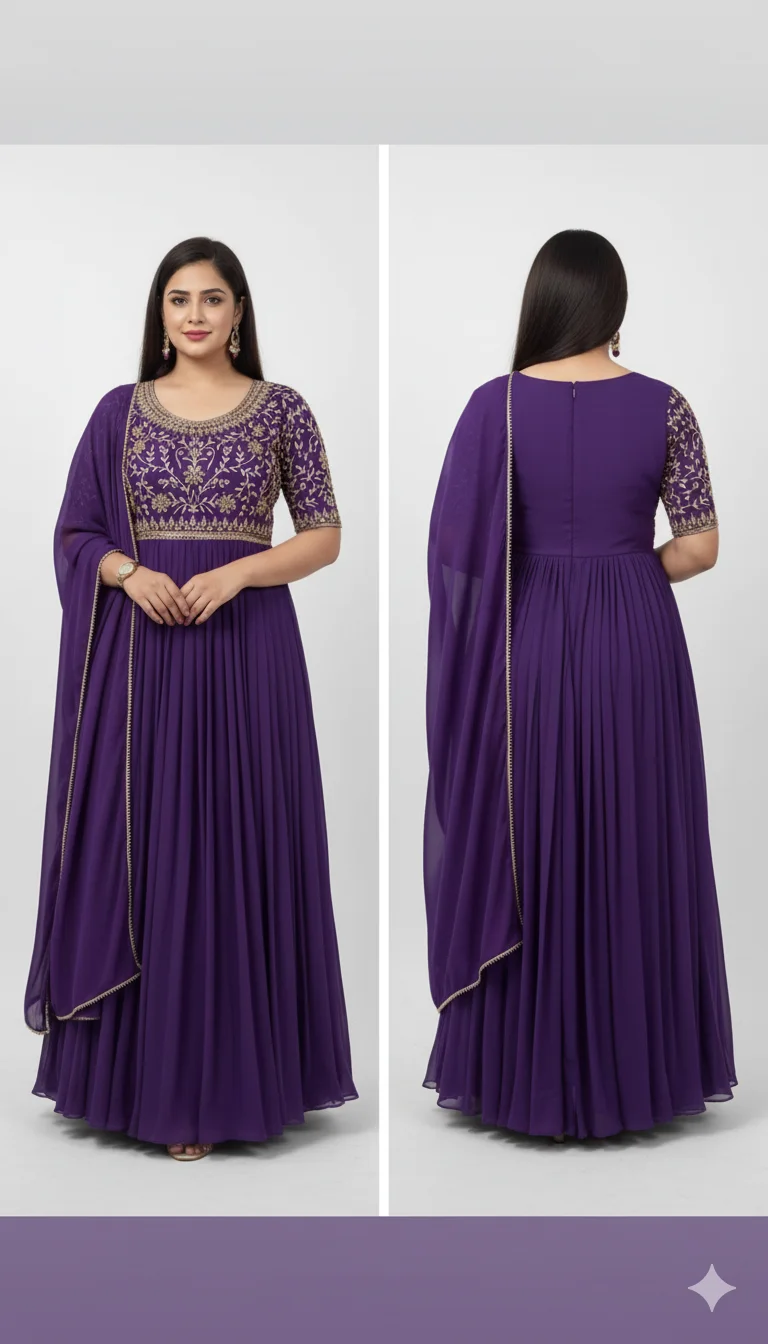

Ethnic gowns combine the flow of an anarkali with the ease of a one-piece dress. They are popular for receptions, festive parties and engagement functions.
Choosing the length
- Floor length: the most glamorous; best with heels.
- Ankle length: easier to walk in and shows off footwear.
- Make sure the hem clears the floor when you wear your shoes.
Choosing the flare
- Alia cut or panelled flare: gradual and flattering; suits most frames.
- Full anarkali flare: dramatic and twirly; best for taller frames.
- A-line flare: simple and easy to wear.
Choosing the fabric
- Georgette: flowing and light; most popular for festive gowns.
- Silk blends: structured and rich.
- Net and organza: layered and dramatic; often need a cancan.
- Velvet: warm and luxurious for winter events.
Colour ideas
- Purple, wine and emerald for evening parties.
- Pastels with embroidery for day functions.
- Black with gold for a striking reception look.
Styling tips
- Dupatta: drape on one shoulder, or skip it for a modern look.
- Jewellery: statement earrings or a choker; avoid both together with heavy embroidery.
- Belt: an embroidered belt can define the waist.
- Footwear: heels or wedges for floor-length gowns.
Fit checklist
- The bodice should fit snugly at the bust.
- The waist should sit at your natural waist.
- Sleeves should allow comfortable movement.
Care
- Dry-clean embroidered gowns.
- Store hanging in a garment bag, or folded with tissue if heavily embellished.
Common mistakes to avoid
- Floor-length gowns with flat shoes. The hem drags and gets damaged.
- Too much volume for a petite frame. Choose an Alia cut or A-line flare.
- Heavy necklace and heavy earrings together. Pick one.
- Skipping the trial. Check how you walk and sit in the gown.
Frequently asked questions
Is an ethnic gown the same as an anarkali?
They are similar. A floor-length anarkali is often worn as a gown. Gowns are usually one-piece and do not need bottoms.
Which gown suits a reception?
A floor-length georgette or silk gown in a jewel tone with sequins or zari.
Do I need a dupatta with a gown?
It is optional. A sheer dupatta adds an ethnic touch; skipping it looks modern.
What is an Alia cut gown?
A gown made from vertical panels that flare gradually, which looks graceful and flattering.
How do I store a heavy gown?
In a breathable garment bag, hanging if light, or folded with tissue if heavily embellished.
Accessories checklist
- Heels or wedges
- Statement earrings or choker
- Clutch
- Bobby pins and a small safety-pin kit
Three complete outfit examples
The reception. Wear a purple georgette Alia cut gown with silver embroidery, floor length, with heels. Add statement earrings, a silver clutch and a soft low bun.
The engagement party. Choose an emerald gown with gold zari and a sheer dupatta on one shoulder. Add a kundan choker and heels.
The festive dinner. Pick an ankle-length wine gown with light sequins. Skip the dupatta, add a belt at the waist, long earrings and block heels.
Choosing a gown for your body shape
Alia cut and A-line gowns suit almost every shape. Full anarkali flares suit taller frames. If you want to highlight your waist, choose a gown with a defined waist seam or add a belt. If you prefer to skim the hips, choose panelled cuts without a waist seam.
Planning for comfort
Long events mean long hours in your gown. Check that the sleeves allow you to raise your arms, the bodice does not dig in when you sit, and the hem clears the floor with your shoes on. Carry a small safety-pin kit and blotting paper.
Care tips
Dry-clean embroidered gowns and store them in breathable garment bags. Avoid hanging very heavy gowns for long periods; fold them with tissue instead.
In short: choose the length for your shoes, the flare for your frame and the fabric for the season. A well-fitted ethnic gown is one of the easiest ways to look festive.