

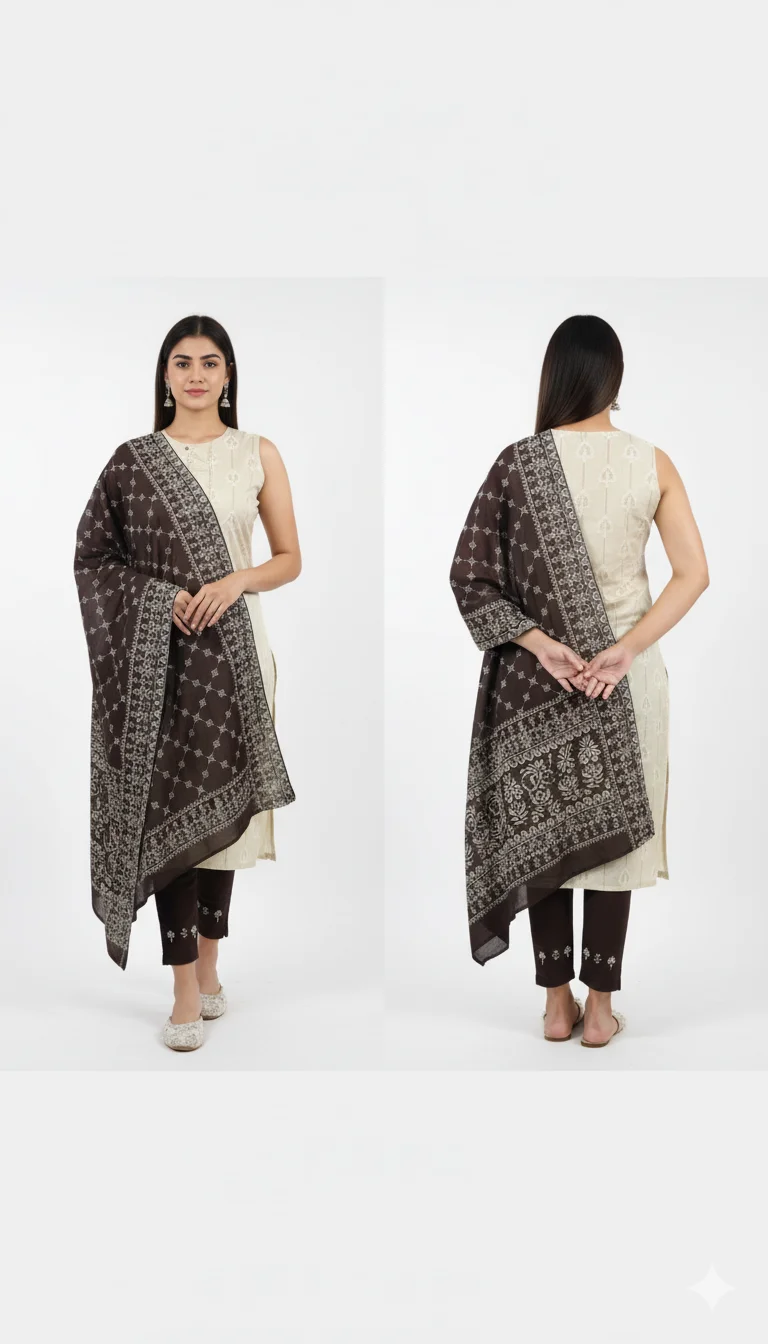

Gota patti is a traditional embellishment from Rajasthan. Small pieces of metallic ribbon (gota) are cut into shapes and stitched onto fabric to create shimmering patterns.
How gota patti is made
Artisans cut gold or silver ribbon into shapes like leaves, flowers and paisleys, then appliqué them onto the fabric with fine stitches. Today, most gota is made from metallic-coated thread or polyester, which is lighter and more affordable than older metal-based gota.
Where you see gota patti
- Lehengas and sarees
- Dupattas and kurtas
- Unstitched dress materials and blouses
Spotting good gota patti work
- Shapes are neatly cut and evenly spaced.
- Stitches holding the gota are fine and secure.
- The gota lies flat without lifting at the edges.
Styling gota patti outfits
Festive
A gota patti kurta set with a matching dupatta, gold jhumkas and juttis.
Weddings
A gota patti lehenga or saree with kundan jewellery and a maang tikka.
Daytime events
A pastel suit with light gota borders and pearl earrings.
Getting unstitched gota patti material tailored
- Place the gota borders at the neckline, sleeves and hem.
- Ask for a soft lining to protect skin from the gota’s edges.
- Keep extra seam allowance for future alterations.
Colour ideas
- Pink, mint and yellow with gold gota for day events.
- Red, maroon and green for weddings.
- Ivory with silver gota for an elegant look.
Care tips
- Dry-clean gota patti outfits.
- Store wrapped in muslin to prevent tarnishing.
- Do not iron directly on gota; iron on the reverse with a cloth.
Common mistakes to avoid
- Ironing directly on gota. It can melt or tarnish.
- Storing in plastic. Moisture can dull the shine.
- Washing at home. Dry-clean gota work.
- Too much jewellery. Gota already shines.
Frequently asked questions
What is gota patti?
A Rajasthani appliqué technique where metallic ribbon is cut into shapes and stitched onto fabric.
Is gota made of real gold?
Traditionally, gota used real metal. Today most gota is made from metallic-coated thread or polyester.
Which occasions suit gota patti?
Festivals, weddings, Teej, Karva Chauth and other celebrations.
Can I wear gota patti in the day?
Yes. Pastel outfits with light gota borders look lovely in daylight.
How do I keep gota shining?
Store it dry, wrapped in muslin, away from moisture and perfume.
Styling formula
Gota patti suit + gold jhumkas + juttis + a simple bun with flowers.
Three complete outfit examples
The Teej celebration. Wear a green leheriya suit with gota patti borders on the neckline, sleeves and dupatta. Add gold jhumkas, green glass bangles and juttis. A braid with a few flowers completes a classic festive look.
The wedding function. Choose a pink or red suit stitched from gota patti dress material, with a heavier gota dupatta. Add a kundan necklace set and a maang tikka. The shimmering gota catches the light beautifully in photographs.
The day puja. Pick an ivory suit with light silver gota borders and a pastel dupatta. Add pearl earrings and flat juttis. The subtle shine feels elegant and calm.
Designing with unstitched gota material
Decide where the gota should appear before your tailor cuts the fabric. Borders at the neckline, sleeve hems and kurta hem frame the outfit. A gota yoke draws attention to the face. Too much gota everywhere can feel heavy, so choose one or two focus areas.
Comfort tips
Gota edges can feel rough against the skin. Ask for a soft lining, especially behind the neckline and sleeves, and make sure seams are finished neatly on the inside.
Pairing gota with other crafts
Gota patti looks lovely with leheriya, bandhani and block prints, all traditional Rajasthani textiles. Combining them creates an authentic, regional look.
In short: gota patti brings Rajasthani shimmer to any outfit. Look for neat, flat work, pair it with gold or pearl jewellery, and store it carefully to keep the shine.