


Thread work is one of the most common decorations on kurtas. Different regions of India have their own styles, and knowing them helps you choose better and care for your clothes properly.
Common types of thread embroidery
- Aari work: done with a hooked needle, creating fine chain stitches. Common on kurtas and dupattas.
- Kantha: simple running stitches, from Bengal and Odisha, often forming patterns of flowers, birds and waves.
- Phulkari: bright floss silk embroidery from Punjab, usually covering large areas with geometric flowers.
- Kashida: Kashmiri embroidery with fine stitches showing chinar leaves, flowers and birds.
- Chikankari: delicate white or pastel stitches from Lucknow on light fabrics.
- Machine embroidery: uniform, faster to produce and more affordable.
Hand vs machine embroidery
- Hand embroidery has small variations in stitch length; machine work looks identical across the piece.
- The reverse of hand embroidery shows knots and thread jumps; machine embroidery often has a backing.
- Both are fine; hand work usually costs more because it takes longer.
Styling embroidered kurtas
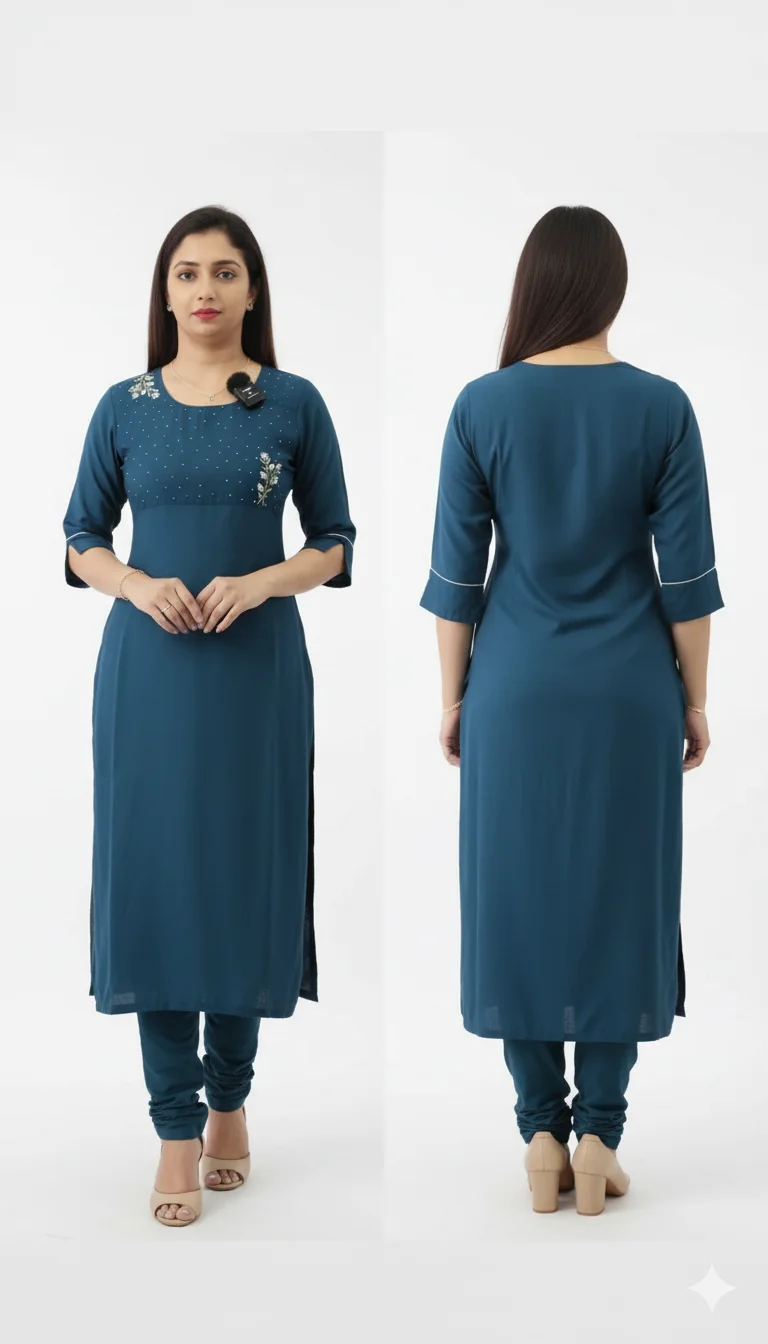
- Neckline embroidery: keep jewellery simple; skip necklaces.
- All-over embroidery: pair with plain trousers and a solid dupatta.
- Border embroidery: wear with straight pants so the hem embroidery is visible.
Occasion guide
- Office: light thread work on cotton in muted tones.
- Festivals: colourful aari or phulkari-style work.
- Weddings: dense thread work with sequins or zari on silk or georgette.
Caring for thread embroidery
- Wash inside out in cold water, by hand if possible.
- Avoid wringing the embroidered area.
- Separate colours: bright threads may bleed in the first wash.
- Iron on the reverse with a towel underneath to keep stitches raised.
- Store flat or folded with tissue between embroidered layers.
Common mistakes to avoid
- Washing embroidered kurtas with zippers and hooks. They catch and pull the threads.
- Using bleach. It can damage coloured threads.
- Tumble drying. Heat can shrink threads and pucker the fabric.
- Choosing very dense embroidery for summer. It traps heat and feels heavy.
Frequently asked questions
How can I tell if thread embroidery is handmade?
Hand embroidery has slight variations in stitch size and spacing. Machine embroidery is perfectly even and often has a stiff backing on the reverse.
Will embroidery threads bleed colour?
Bright threads, especially red and dark colours, can bleed in the first few washes. Wash separately in cold water.
How do I fix a loose embroidery thread?
Do not pull it. Push it gently to the reverse side with a needle and tie a small knot.
Which is better: aari or machine embroidery?
Aari work is finer and handmade, so it usually looks richer and costs more. Machine embroidery is durable and affordable for daily wear.
Can I iron over embroidery?
Iron on the reverse side with a towel underneath, so the stitches stay raised.
Styling tip
With thread-work trousers, keep the kurta plain. With a thread-work kurta, keep the trousers plain. One embroidered piece per outfit is usually enough.
Three complete outfit examples
The office look. A thread work straight kurta in ivory with solid trousers and minimal jewellery.
The festive look. The same kurta with an aari-embroidered dupatta, jhumkas and juttis.
The casual look. A kantha-stitch kurta with jeans and kolhapuris.
Buying tip
Turn the kurta inside out before buying. Neat backs, secure knots and no loose threads are good signs of quality embroidery.
Quick tip
If you are new to embroidered kurtas, start with light thread work on cotton. It is easy to wear, easy to wash and suits almost every occasion, from office days to family lunches.
In short: thread embroidery comes in many regional styles. Choose the type that suits the occasion, style it with plain pieces, and wash gently inside out to keep the work looking new.