


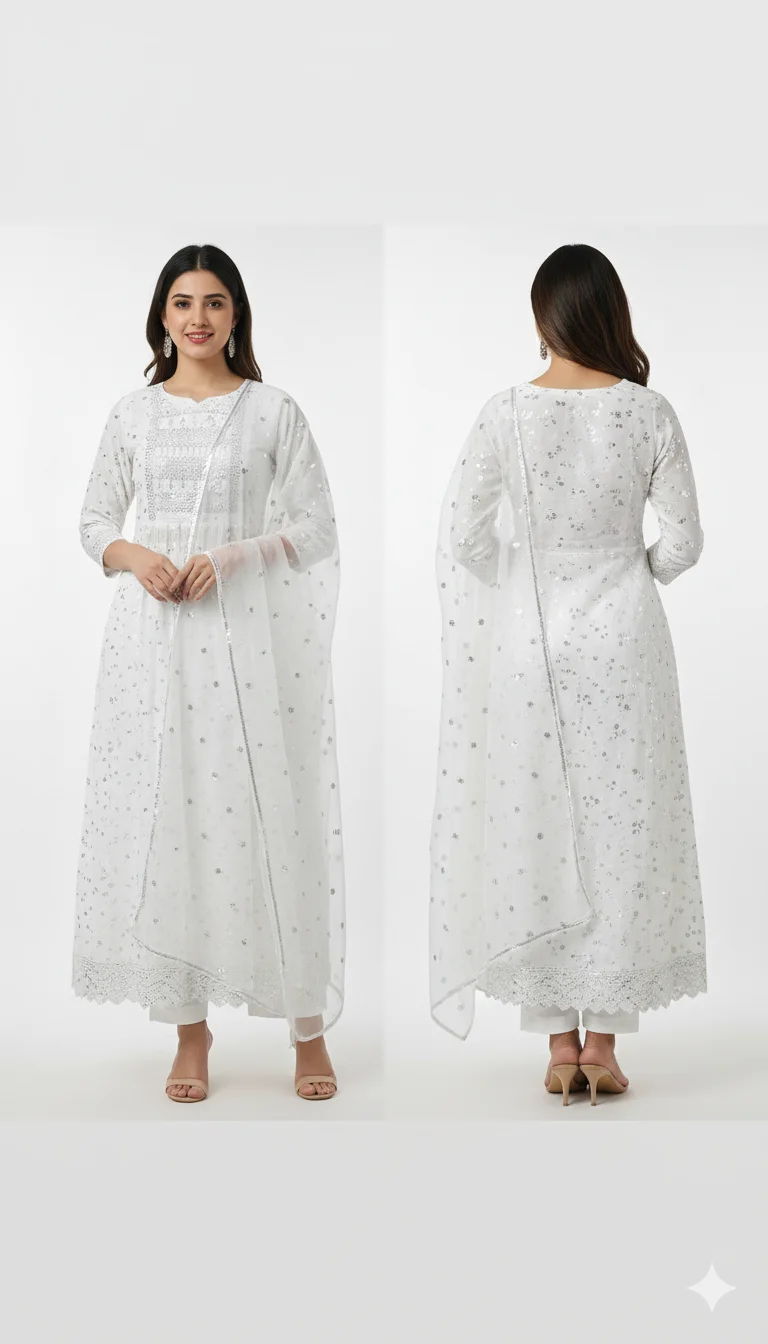

Mukesh, also called badla or kamdani, is a metal embellishment technique from Lucknow. Thin, flat metal wire is twisted through the fabric to create tiny shimmering dots. It is often combined with chikankari embroidery.
How mukesh work is made
Artisans thread a flat metallic wire through the fabric with a needle, then twist and press it to create a small raised dot. Many dots together form patterns like stars, flowers or all-over shimmer. It is slow, detailed handwork.
Mukesh with chikankari
Chikankari gives the delicate thread embroidery, and mukesh adds sparkle. Together they make a kurti festive enough for weddings while staying light and elegant.
Fabrics commonly used
- Georgette and chiffon for a dressy, flowing look.
- Viscose and rayon blends for softness and affordability.
- Cotton for a subtle, everyday shimmer.
Styling a mukesh work kurti
Festive day events
A pastel mukesh chikankari kurti with a white palazzo and pearl earrings.
Evening functions
A darker base like black, navy or wine with silver mukesh dots, paired with straight pants and statement earrings.
Wedding guest
Add an organza dupatta and embellished juttis.
Jewellery
Mukesh already shines, so keep jewellery simple: pearls, silver jhumkas or small diamonds-look studs.
Spotting real mukesh work
- Real mukesh dots feel slightly raised and metallic.
- Printed or glitter imitations look flat and may flake.
- Handwork shows small variations in spacing.
Care tips
- Dry-clean or very gently hand wash in cold water.
- Never wring or scrub the mukesh area.
- Iron on the reverse side with a cloth between.
- Store folded in cotton, away from moisture, to prevent tarnishing.
Common mistakes to avoid
- Washing mukesh work in a machine. It can bend and loosen the metal dots.
- Spraying perfume on it. It can tarnish the metal.
- Wearing it with lots of sparkly jewellery. The garment already shines.
- Folding tightly. Sharp folds can flatten the dots.
Frequently asked questions
Is mukesh the same as badla or kamdani?
Yes. These are different names used for the same metal-wire embellishment technique from Lucknow.
Does mukesh work tarnish?
Metallic wire can dull over time, especially with moisture. Store it dry and wrapped in muslin.
Can mukesh work be worn to the office?
Light, scattered mukesh on a pastel base can work for festive office days.
What is the difference between mukesh and sequins?
Mukesh dots are created by twisting metal wire into the fabric. Sequins are separate discs sewn on.
Is mukesh work heavy?
No. It adds very little weight compared with sequins or stone work.
Colour pairings
- White chikankari with silver mukesh: classic.
- Pastel pink with gold mukesh: festive.
- Black with silver mukesh: elegant for evenings.
Three complete outfit examples
The day wedding. Wear a pastel pink chikankari kurti with mukesh dots, paired with a white palazzo and pearl earrings. Add an organza dupatta and juttis.
The festive evening. Choose a black georgette kurti with silver mukesh work, paired with slim black pants and statement silver earrings. Add heels and a clutch.
The Eid lunch. Pick an ivory mukesh kurti with a mint sharara and a light dupatta. Add jhumkas and a potli bag.
How to spot good craftsmanship
Look at the spacing and size of the mukesh dots. Even, neatly twisted dots show skill. Run your hand lightly over the fabric; real mukesh should feel smooth and secure, not loose or scratchy.
Price and value
Hand mukesh work takes time, so dense patterns are more expensive. Lighter scattered mukesh is more affordable and still adds lovely shimmer.
Storage tips
Wrap mukesh garments in soft muslin, store them in a dry place and keep them away from perfume and moisture to prevent tarnishing.
In short: mukesh work is a beautiful Lucknowi craft that adds gentle sparkle. Keep the styling simple, choose soft colours for day and darker bases for evening, and handle it gently.