

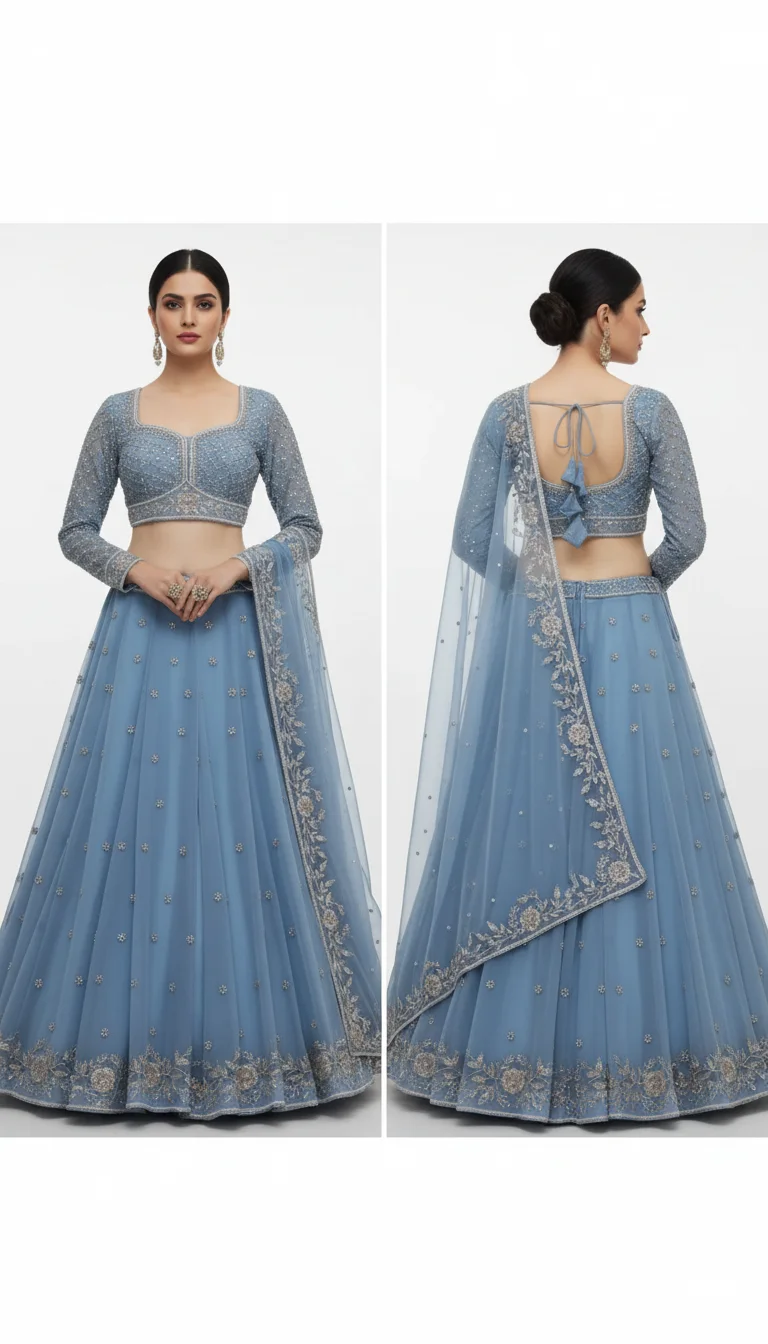

Many lehengas, especially georgette and sequinned ones, are sold semi-stitched. The skirt is mostly ready, while the blouse and final fitting are done by your tailor. Done right, you get a lehenga that fits perfectly.
What usually comes stitched
- The lehenga skirt, often with an adjustable waist.
- Embroidery and embellishments.
- The dupatta, usually finished.
What needs tailoring
- The blouse (choli), from unstitched fabric.
- The lehenga waist and length.
- Linings and cancan (net layer) if needed.
Measurements to give your tailor
Blouse
- Bust, under-bust and waist
- Shoulder width
- Armhole and sleeve length
- Front and back neck depth
- Blouse length
Lehenga
- Waist (where you will wear it)
- Length from waist to floor, wearing your heels
Tailoring tips
- Ask for a cancan or extra lining if you want more flare.
- Choose padding or a built-in bra in the blouse for comfort and shape.
- Add hooks or a side zip for easy wear.
- Keep extra margin in seams so you can alter later.
- Do a trial fitting with your shoes on.
Styling a georgette sequinned lehenga
- Sangeet or cocktail: a sleeveless or strappy blouse, statement earrings and a sleek bun.
- Wedding guest: elbow sleeves, a choker and maang tikka.
- Reception: a sequinned lehenga with a sheer dupatta draped on one shoulder.
Dupatta draping
- One shoulder: easy to manage and shows off the blouse.
- Both shoulders: traditional and elegant.
- Head drape: for ceremonies, pinned to the hair.
Care
- Dry-clean only.
- Store in a breathable garment bag, lying flat or folded with tissue between layers.
Common mistakes to avoid
- No trial fitting. Always try the lehenga and blouse with your shoes before the event.
- Too little seam allowance. You may want to alter it later.
- Heavy blouse padding in summer. Choose breathable linings.
- Leaving the cancan out when you want flare. The skirt may look flat.
Frequently asked questions
What is a cancan in a lehenga?
A stiff net layer sewn inside the lehenga to give it volume and flare.
How much time does tailoring take?
A week or two in normal times, longer during wedding season. Plan ahead.
Can I adjust the lehenga length myself?
It is better to let a tailor do it, especially with embellished hems.
Which blouse style is most comfortable?
Elbow-length sleeves with a moderate neckline are comfortable and suit most events.
Can a lehenga be re-styled later?
Yes. The skirt can be worn with a crop top, and the dupatta can be paired with plain suits.
Rewearing ideas
- Lehenga skirt + white shirt tied at the waist for a fusion look.
- Dupatta with a plain kurta set for festivals.
- Blouse with a different saree.
Three complete outfit examples
The sangeet night. Wear a georgette lehenga with rivet moti and sequin work in a deep colour, with a sleeveless or strappy blouse. Drape the dupatta on one shoulder, add chandelier earrings and block heels so you can dance.
The wedding ceremony. Choose elbow-length sleeves and a higher neck for the blouse. Drape the dupatta over your head for rituals, add a maang tikka, a choker and bangles.
The reception. Pair the lehenga with an off-shoulder blouse and a sheer dupatta pinned like a cape. Add a statement necklace and soft waves.
Budget planning
Semi-stitched lehengas are usually more affordable than fully custom ones, but remember to budget for tailoring, lining, cancan, padding and finishing such as latkans. Ask your tailor for a full estimate before work begins.
Lehenga weight and comfort
Sequin and moti work add weight. If you will wear the lehenga for many hours, choose a lighter georgette base and ask your tailor for a comfortable waistband with a broad elastic or adjustable hooks.
Care tips
Dry-clean only, store flat or folded with tissue, and keep sequin work away from fabrics that may snag.
In short: give your tailor full measurements, ask for linings and a trial fitting, and your semi-stitched lehenga will look custom-made.