

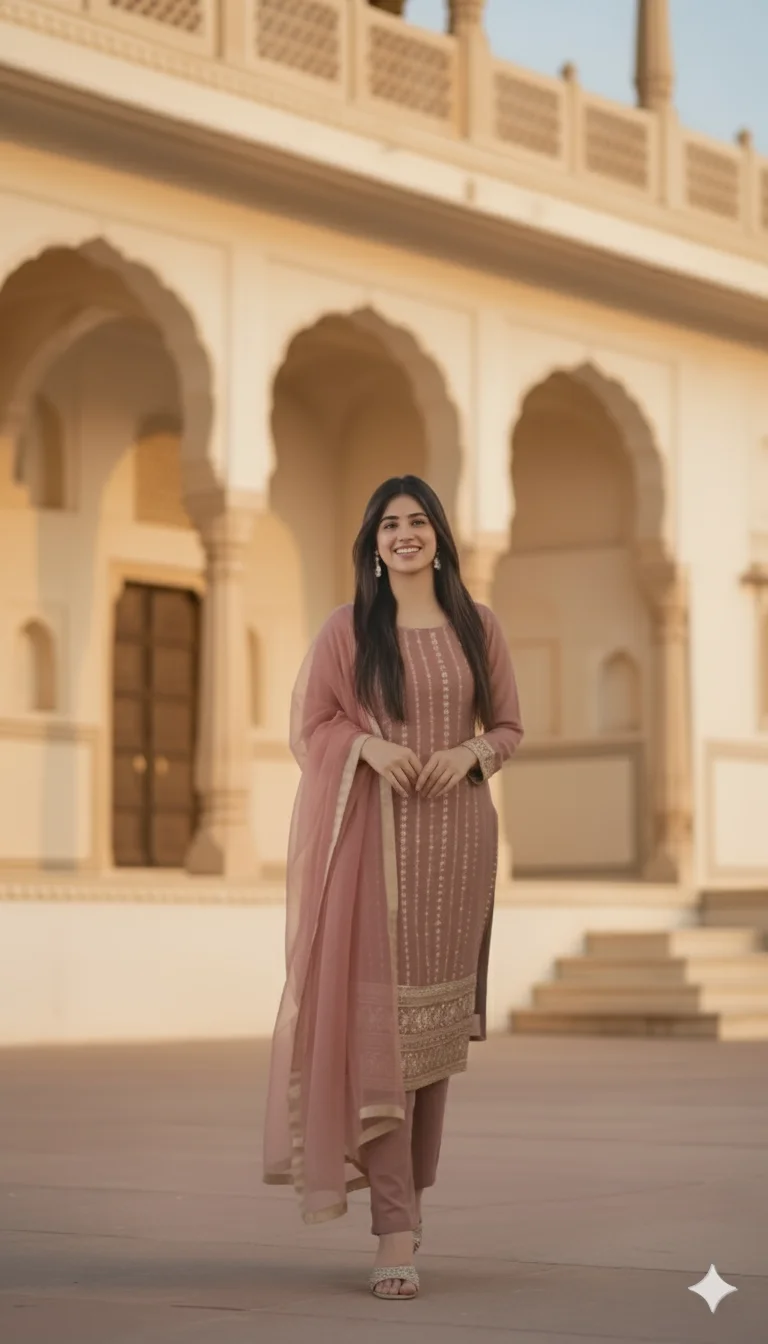

A solid kurta with a printed dupatta is one of the easiest formulas in ethnic wear. The plain base keeps it calm, while the dupatta adds colour and personality.
Why the formula works
- The solid kurta and pants form a clean base.
- The printed dupatta becomes the focus.
- You can change the whole look just by changing the dupatta.
Matching colours
- Pick a colour from the print: if the dupatta has pink, green and white, wear a pink or green kurta.
- Neutral base: white, beige, grey or black kurtas pair with almost any printed dupatta.
- Contrast: a yellow kurta with a blue printed dupatta looks bright and fun.
Popular printed dupatta styles
- Bandhani: tie-dye dots; festive and colourful.
- Leheriya: wave-like stripes; perfect for monsoon.
- Block prints: earthy and handmade.
- Kalamkari: hand-painted or printed stories and motifs.
- Floral prints: fresh and versatile.
Outfit ideas
- Daily wear: white cotton kurta and pants with an indigo block print dupatta.
- Office: grey kurta with a soft floral dupatta.
- Festive: mustard kurta with a pink bandhani dupatta and jhumkas.
- Monsoon: green kurta with a leheriya dupatta.
Draping
- Drape on one shoulder for everyday wear.
- Spread it on both shoulders to show more of the print for events.
Jewellery
Keep jewellery simple, since the dupatta is already the statement: small jhumkas, studs or a few bangles.
Building a collection
Two or three solid kurta sets plus five or six printed dupattas can create more than fifteen different outfits.
Common mistakes to avoid
- A kurta colour that is not in the dupatta print. The outfit looks unplanned.
- A printed dupatta with heavy prints elsewhere. Keep everything else solid.
- Very small dupattas. They look skimpy with full kurta sets.
- Draping so the print is hidden. Spread it out to show the pattern.
Frequently asked questions
Which solid kurta colours are most versatile?
White, beige, black, navy and grey match most printed dupattas.
Can I wear a bandhani dupatta to the office?
Yes, a soft-coloured bandhani dupatta on a neutral kurta works for festive office days.
What is leheriya?
A tie-dye technique from Rajasthan that creates wave-like diagonal stripes, popular during the monsoon festival season.
How do I store printed dupattas?
Fold them loosely and store in cotton, away from direct light to prevent fading.
Can I use a printed dupatta as a scarf?
Yes. Lighter cotton and mulmul dupattas make lovely scarves with Western outfits.
Dupatta collection idea
- Indigo block print (daily)
- Floral mulmul (summer)
- Bandhani (festivals)
- Leheriya (monsoon)
- Kalamkari (art and culture events)
Three complete outfit examples
The workday. Wear a white cotton kurta and pants with an indigo block-print dupatta. Add a watch and flats. Clean, simple and professional.
The festival. Choose a mustard solid kurta set with a pink bandhani dupatta draped on both shoulders. Add gold jhumkas and glass bangles. The dupatta brings all the festive colour.
The monsoon day. Pick a green solid kurta set with a leheriya dupatta in green and yellow. Add waterproof sandals and silver studs. Leheriya is traditionally linked to the monsoon season.
Building a dupatta wardrobe
Start with one versatile printed dupatta in colours you wear often. Add a festive bandhani or gota dupatta, then a seasonal leheriya or floral one. Store them folded in a drawer or on a scarf hanger so you can see all your options at once.
Matching tips in practice
Lay your dupatta flat and pick out the three main colours in the print. Any solid kurta in one of those colours will look coordinated. For a softer look, choose the lightest colour; for a bolder look, choose the darkest.
Care tips
Wash printed dupattas separately at first, as dyes may bleed. Use cold water and dry in shade.
In short: keep the kurta plain, let the dupatta bring the colour, and match one shade between them. It is a simple formula that always works.