
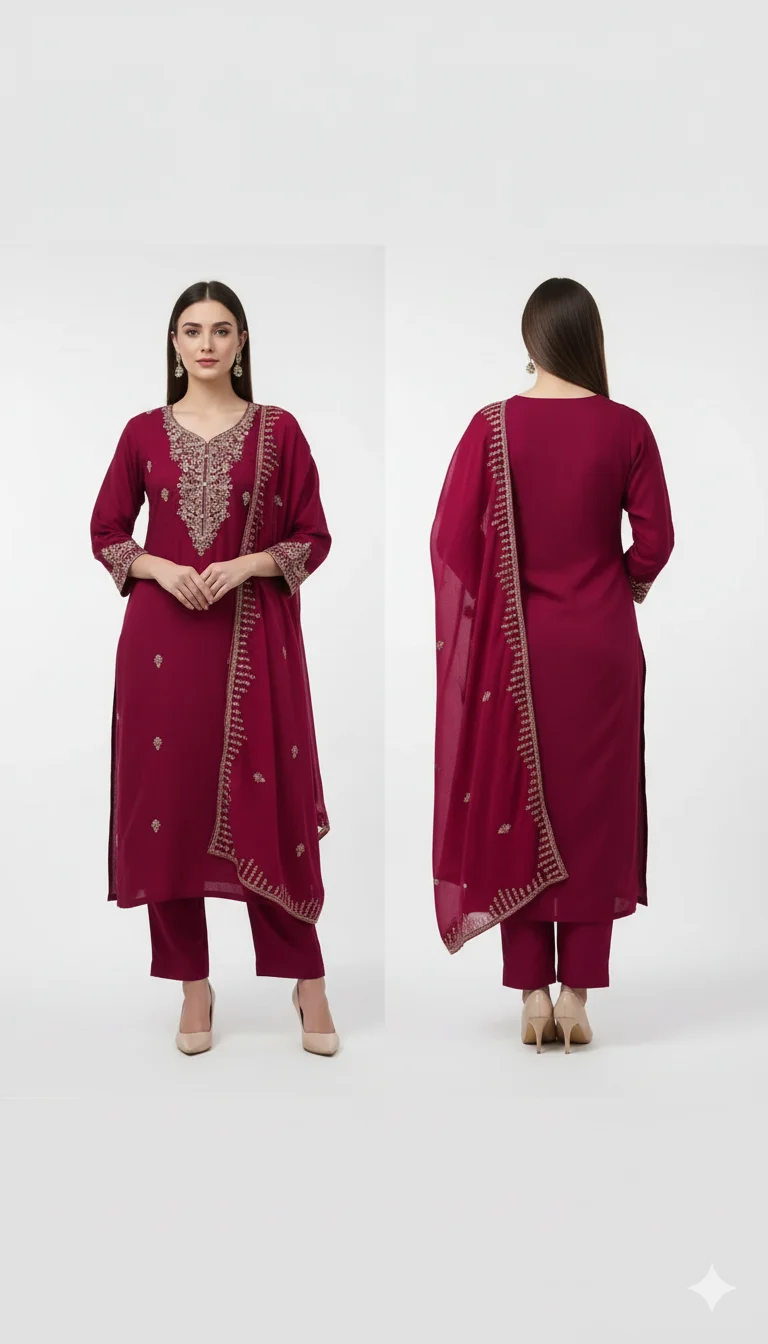

The way you drape your dupatta can change the look of the same kurta set completely. Here are eight easy styles, from everyday to festive.
1. Classic one-shoulder drape
Fold the dupatta lengthwise and pin it on your left shoulder, letting it fall at the back. Practical for work and long days.
2. Both shoulders, open front
Place the dupatta around your neck and let both ends fall over your shoulders to the back. Shows off neckline embroidery.
3. Front V drape
Spread the dupatta across your chest in a V, with ends falling behind your shoulders. Traditional and elegant.
4. Side drape
Pin the dupatta on one shoulder and bring the other end across the body to the opposite hip. Elegant for weddings.
5. Cape style
Drape the dupatta over both shoulders like a cape, pinned at the front or left open. Modern and stylish.
6. Belted drape
Drape over one shoulder, bring it across the waist and hold it with a belt. Adds shape to straight kurtas.
7. Head drape
Cover your head with the dupatta and pin it to your hair, with ends draped over the shoulders. Good for religious ceremonies.
8. Neck scarf style
Loop the dupatta around your neck once and let the ends hang in front. Casual and quick.
Choosing a drape by occasion
- Office: one-shoulder or neck scarf.
- Festive: front V or both shoulders.
- Wedding: side drape or head drape for ceremonies.
- Party: cape or belted drape.
Fabric and drape
- Cotton and mulmul: soft, easy for casual drapes.
- Chiffon and georgette: flowy, good for open drapes.
- Silk and banarasi: stiffer, best pinned and pleated.
- Net and organza: sheer, best for showing embroidery underneath.
Pinning tips
- Use small safety pins on the inside of the dupatta.
- Pin at the shoulder seam of your kurta for the strongest hold.
Common mistakes to avoid
- Using too many pins. It makes the drape look stiff.
- Pins that show. Pin from the inside.
- The wrong drape for the fabric. Stiff silk dupattas look best pleated and pinned.
- Letting long ends trail on the floor. They can catch and get dirty.
Frequently asked questions
Which dupatta drape is most practical?
The classic one-shoulder drape. It keeps your hands free and stays in place.
How do I drape a dupatta for a wedding?
The side drape or front V drape looks elegant. For ceremonies, a head drape may be appropriate.
Can I wear a dupatta with jeans?
Yes. A cotton dupatta or stole looped like a scarf works well with jeans and kurtis.
How long is a standard dupatta?
Usually around 2.25 to 2.5 metres.
How do I keep a dupatta from slipping?
Pin it to the kurta at the shoulder seam, or use a dupatta pin or brooch.
Drape and fabric pairing
- Cotton: neck scarf, one-shoulder.
- Chiffon: front V, cape.
- Silk: side drape, pinned.
- Net or organza: both shoulders, open front.
Three complete outfit examples
The office look. Embroidered straight kurta set with a light dupatta in a one-shoulder drape, plus loafers.
The wedding look. The same set with a heavier dupatta in a side drape and statement earrings.
The party look. The set with the dupatta draped like a cape and block heels.
Practise at home
Try each drape once at home in front of a mirror. Note which pins you need and where, and keep a small pin kit in your bag for events.
In short: match the drape to the occasion. One-shoulder for daily wear, V and side drapes for weddings, cape and belted styles for a modern look.