


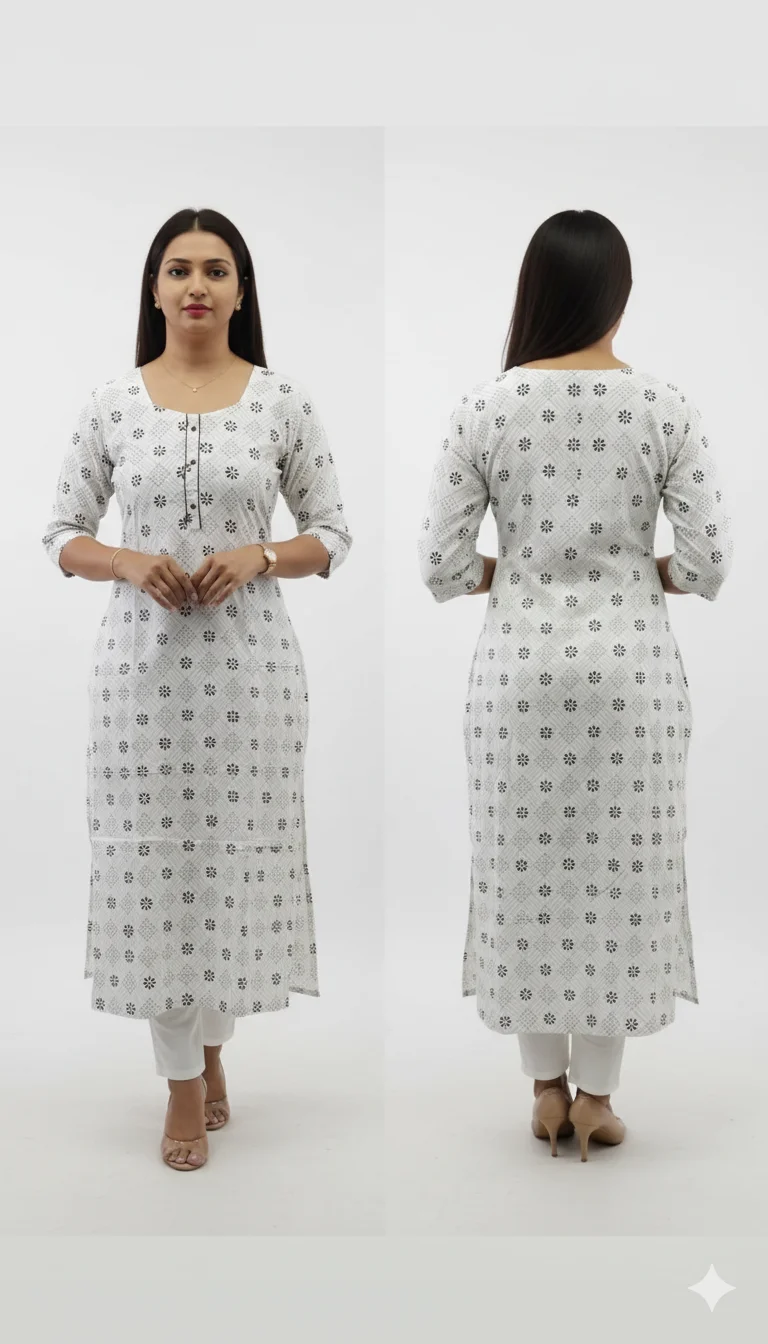

Floral kurtas are often seen as summer wear, but with the right fabric and layering, you can wear them all year. Here is how to adapt them for each season.
Summer
- Fabrics: cotton, mulmul and linen blends.
- Colours: pastels and whites with light florals.
- Pairing: white straight pants or palazzos.
- Footwear: kolhapuris and sandals.
- Tip: choose loose, breathable fits and skip heavy dupattas.
Monsoon
- Fabrics: rayon and quick-dry blends; avoid light cotton that turns see-through when wet.
- Colours: darker bases like navy, bottle green and maroon hide splashes.
- Pairing: ankle-length or cropped pants so hems do not get muddy.
- Footwear: waterproof sandals or flats.
- Tip: carry a light stole instead of a long dupatta.
Winter
- Fabrics: heavier cotton, khadi, velvet or silk blends.
- Colours: deep florals on dark backgrounds like black, wine and forest green.
- Layering: a long cardigan, a short jacket, or a shawl over the kurta.
- Pairing: warm leggings or lined pants.
- Footwear: closed juttis or ankle boots.
Year-round styling tips
- Pick florals in a size that suits you: small prints for petite frames, large prints for taller frames.
- A solid bottom balances a busy floral kurta.
- Jewellery: silver or oxidised for day, gold for festive events.
Office-friendly floral kurtas
- Choose muted colours and small florals.
- Pair with straight pants and minimal jewellery.
Care tips for each season
- Summer: wash often, in cold water.
- Monsoon: dry fully before storing to avoid mildew.
- Winter: air out heavier fabrics between wears.
Common mistakes to avoid
- Light cotton florals in heavy monsoon rain. They can turn see-through when wet.
- Bright summer florals in winter without layers. Add a dark shawl or jacket to make them seasonal.
- Very large prints on a petite frame. Smaller florals look more balanced.
- Storing damp clothes. It can cause mildew, especially in monsoon.
Frequently asked questions
Can I wear floral kurtas in winter?
Yes. Choose darker florals on heavier fabrics and layer with cardigans, jackets or shawls.
What colours of florals suit monsoon?
Darker bases like navy, bottle green and maroon hide splashes and look rich.
Which fabric is best for floral kurtas in summer?
Cotton and mulmul are the most breathable.
Do floral kurtas work for the office?
Yes, in small prints and muted shades with straight pants.
How should I store seasonal kurtas?
Wash, dry fully, and store in breathable cotton bags with a neem or cedar sachet.
Seasonal checklist
- Summer: light fabric, light colour, loose fit.
- Monsoon: quick-dry fabric, dark colour, cropped length.
- Winter: heavier fabric, deep colour, warm layers.
Three complete outfit examples
The summer office. Wear a white cotton kurta with small blue florals and white straight pants. Add tan sandals, a watch and a mulmul dupatta for the sun.
The monsoon commute. Choose a navy rayon kurta with red florals and ankle-length navy pants. Add waterproof sandals and a compact umbrella. Dark rayon dries quickly and hides splashes.
The winter wedding. Pick a black velvet or silk-blend kurta with rich floral embroidery. Pair it with slim pants, a pashmina-style shawl and closed juttis. Add gold jhumkas for warmth and glow.
Florals for men
Floral prints are not only for women. Men can wear small floral kurtas or shirts in muted colours for summer events and festivals, paired with solid trousers or pyjamas.
Mixing seasons with dupattas
A heavier dupatta or shawl can carry a summer floral kurta into autumn. A light cotton dupatta can make a darker winter floral wearable in early spring. Dupattas are the easiest way to adjust one kurta to several seasons.
Care tips
Wash floral cotton in cold water, dry in shade and store in breathable bags. Air out heavier winter pieces between wears and dry-clean embroidered velvet.
In short: light cotton florals for summer, darker rayon for monsoon and layered heavier fabrics for winter. One love for florals, three seasons of outfits.