

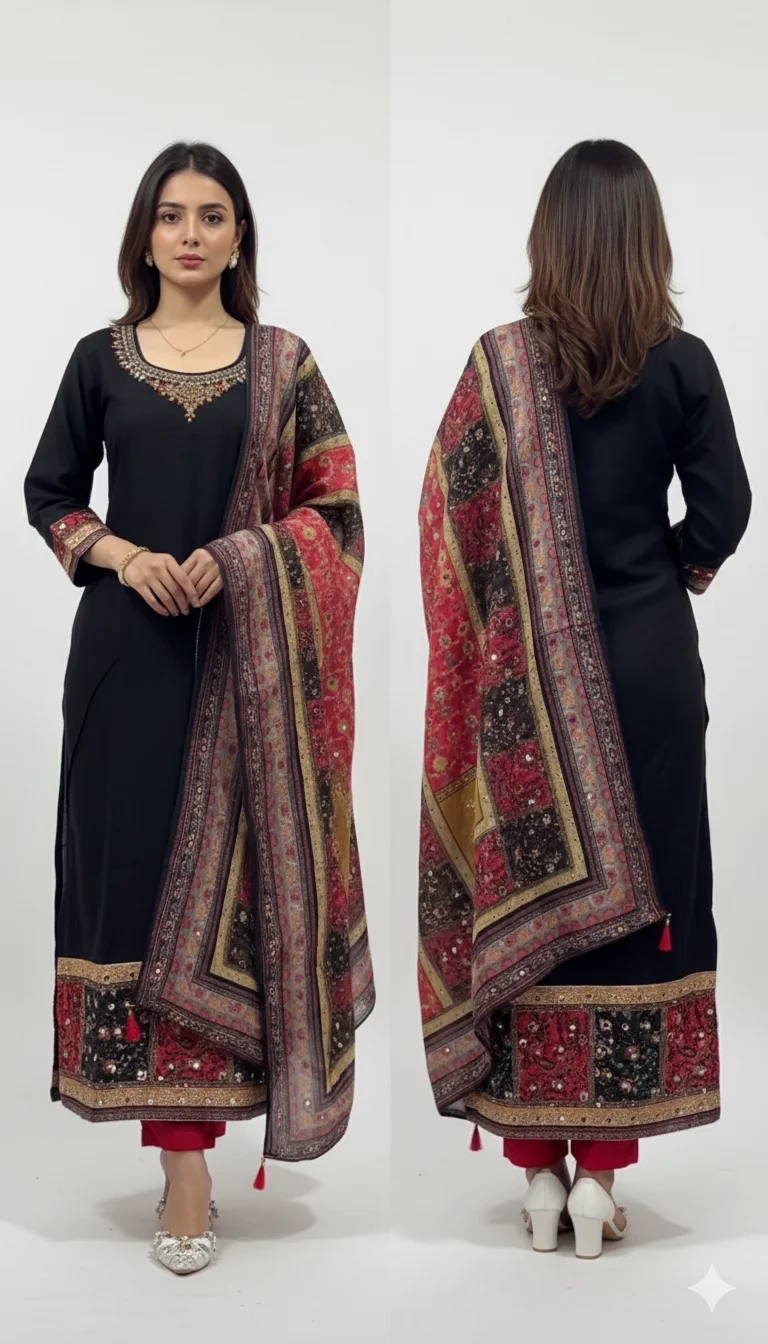

Many kurta sets are described as “ethnic motif printed”, but what does that actually mean? Indian textiles use a set of traditional patterns that have been around for centuries. Knowing them makes it easier to choose and style printed outfits.
Common ethnic motifs
- Paisley (kairi or ambi): a teardrop shape with a curved tip. One of the most recognisable Indian motifs, used in prints, embroidery and weaves.
- Buta and buti: small repeated floral or leaf motifs scattered across the fabric. Buti is the smaller version; buta is larger.
- Jaal: a net or trellis pattern where motifs connect to cover the whole fabric. It looks rich and works well for festive wear.
- Mughal florals: stylised flowers and vines inspired by Mughal art and architecture.
- Geometric borders: repeated diamonds, chevrons or temple shapes, often along hems and necklines.
- Animal and bird motifs: elephants, peacocks and parrots appear in many regional prints.
How to style motif prints
For the office
Choose small buti prints in muted colours like indigo, grey or olive. Pair the kurta with straight pants and keep the dupatta optional.
For festivals
Go for jaal or large paisley prints in brighter colours. Add jhumkas and a plain or lightly embellished dupatta.
For casual outings
A paisley-print kurta with jeans or a solid palazzo is easy and comfortable.
Mixing motifs
- Pair a printed kurta with a solid dupatta and pants to avoid a busy look.
- If you want to mix prints, keep them in the same colour family and vary the scale, for example a small buti kurta with a larger paisley dupatta.
- Let one piece be the statement and keep the rest simple.
Choosing the right print for you
- Small, close prints look neat and suit petite frames.
- Large, spaced-out motifs look bold and suit taller frames.
- Vertical placements, such as a printed placket or border down the front, can make you look taller.
Fabric matters
Ethnic motif prints look crisp on cotton and cotton blends for daily wear. On rayon, the colours look brighter and the fabric drapes more softly. Silk blends give motif prints a richer feel for occasions.
Care tips
- Wash printed cotton inside out in cold water.
- Dry in shade to keep colours from fading.
- Wash dark and light prints separately for the first few washes.
Common mistakes to avoid
- Wearing two large prints together. A big paisley kurta with a big jaal dupatta can look busy. Vary the scale.
- Choosing bright motif prints for formal meetings. Muted colours and small motifs look more professional.
- Forgetting the dupatta colour. Pick it from the print so the set looks planned.
- Ignoring fabric quality. Prints on thin fabric can look faded after a few washes.
Frequently asked questions
What does “ethnic motif print” mean?
It means the fabric uses traditional Indian design elements such as paisley, buta, jaal, Mughal florals or temple borders.
Which motif is best for everyday wear?
Small buti prints are the easiest to wear daily. They look neat and hide small stains and creases.
Are motif prints suitable for festivals?
Yes. Larger jaal and paisley prints in bright colours look festive, especially with a gold or contrast dupatta.
How can I tell a hand-block motif from a screen print?
Hand-block prints show small gaps, overlaps and slight colour variations. Screen prints look perfectly even.
Can men wear ethnic motif prints?
Yes. Paisley and buti prints are common on men’s kurtas, shirts and Nehru jackets. Choose muted colours for daily wear and richer tones for festivals.
A simple outfit plan
- Monday: indigo buti kurta, white pants, no dupatta.
- Wednesday: olive paisley kurta, beige pants, silver studs.
- Festival day: maroon jaal kurta set, gold-print dupatta, jhumkas.
In short: small motifs for work, large motifs for festivals, and one printed piece per outfit is usually enough. Once you know the motifs, choosing the right print gets much easier.