


Chikankari is a hand embroidery tradition from Lucknow, known for its fine, delicate stitches on light fabrics. Traditionally done in white thread on white muslin, today it appears in many colours and fabrics.
Common chikankari stitches
- Bakhiya (shadow work): stitched on the reverse so the pattern shows through as a soft shadow on the front.
- Phanda: tiny knots that look like small grains or berries.
- Murri: rice-shaped knots, often used in flower centres.
- Jaali: a net effect created by pulling threads apart, without cutting the fabric.
- Tepchi: long running stitches used for outlines.
- Keel kangan and hool: used for small petals and eyelets.
Fabrics used
- Cotton and mulmul: light and breathable for summer.
- Georgette and chiffon: flowing and dressier for events.
- Viscose and rayon blends: affordable and soft.
Spotting good-quality chikankari
- Hand-embroidered work has small irregularities; machine work looks perfectly uniform.
- Dense, fine stitches take longer and usually mean better craftsmanship.
- The reverse side of hand chikankari shows neat threads, especially in shadow work.
How to style a chikankari kurta
Office
A white or pastel cotton chikan kurta with straight pants and a watch. Keep jewellery minimal.
Summer brunch
Pair a chikan kurta with jeans or a white palazzo and silver jhumkas.
Festive day event
Choose georgette chikankari with mukesh (shimmer) work, add a contrast dupatta and kolhapuris.
Colour ideas
- Classic white on white
- Pastel pink, mint and powder blue
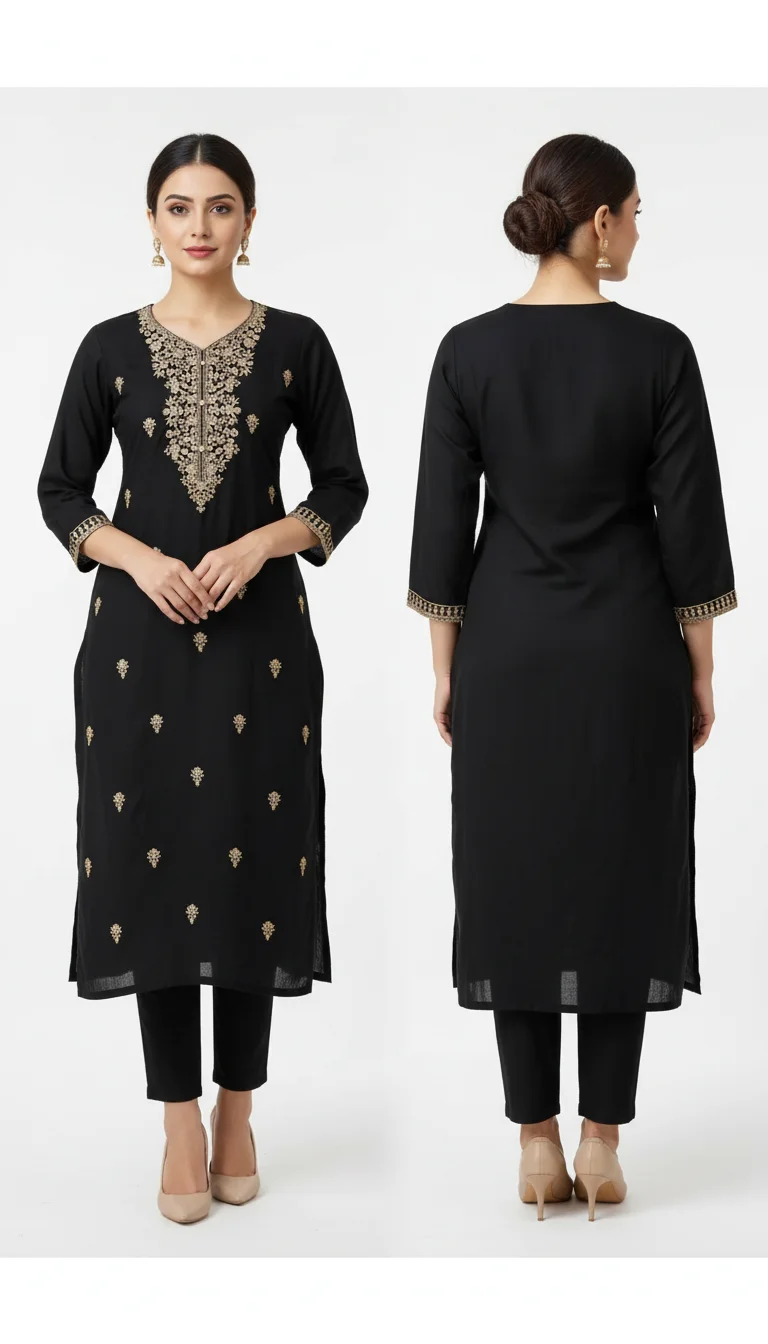
- Darker bases like navy or black with white thread, for evenings
Care tips
- Hand wash in cold water with mild detergent.
- Do not scrub the embroidered areas.
- Dry in shade and iron on the reverse side.
- Use a light starch on cotton chikankari to keep it crisp.
Common mistakes to avoid
- Pairing chikankari with heavy jewellery. It hides the delicate embroidery.
- Wearing white chikankari without a slip. Light fabrics like mulmul are often see-through.
- Ironing on the front. It flattens the raised stitches.
- Washing with bright colours. White chikankari can pick up dyes easily.
Frequently asked questions
Is all chikankari done by hand?
Traditional chikankari is hand-embroidered. Machine-made versions are common and more affordable, but they look more uniform.
How long does a hand-embroidered chikankari kurta take?
It depends on the density of the work. A simple piece may take days, while dense, detailed work can take weeks.
Can chikankari be worn in winter?
Yes. Choose chikankari on georgette, silk or heavier cotton, and layer a shawl or jacket over it.
What colours does chikankari come in?
Classic white on white, pastels like pink, mint and blue, and darker bases like navy and black with white or matching thread.
Is chikankari suitable for men?
Yes. Chikankari kurtas for men are popular for festivals, weddings and summer events.
Styling for men and women
- Women: white chikan kurta with a pastel palazzo and pearl earrings.
- Men: cream chikan kurta with white pyjama and juttis.
- Fusion: chikan short kurti with blue jeans and kolhapuris.
Three complete outfit examples
The office look. White chikankari cotton kurta with beige trousers and a watch.
The summer brunch. Pastel chikan kurta with a white palazzo and pearl studs.
The festive look. Georgette chikankari with mukesh work, a contrast dupatta and juttis.
Buying tip
Ask whether the chikankari is hand or machine embroidered, and check the shadow work from the reverse side.
Quick tip
Chikankari also makes a meaningful gift, especially for summer birthdays and festivals. Choose a classic white or pastel piece, which suits almost everyone and pairs with many different bottoms.
In short: chikankari is a delicate craft that suits summer perfectly. Choose a breathable base fabric, look for fine hand stitches, and keep the styling simple to let the embroidery shine.