


Mirror work, also called shisha embroidery, uses small pieces of mirror stitched onto fabric. It is closely linked with the craft traditions of Gujarat and Rajasthan, where it decorates clothing, wall hangings and bags.
How mirror work is done
Small round or shaped mirrors are held in place by a frame of stitches around the edge. The stitching itself is often colourful and forms part of the design. Some modern pieces use pre-framed mirror sequins or machine embroidery for speed.
Spotting good mirror work
- Mirrors sit firmly and do not wobble.
- The stitching around each mirror is even and tight.
- Hand mirror work shows small variations in stitch shape.
Styling mirror work today
Festive
A mirror work kurta with plain pants, oxidised jhumkas and juttis. Perfect for Navratri and Diwali.
Casual
A kurta with small mirror details on the neckline, worn with jeans and kolhapuris.
Fusion
A mirror work jacket over a plain dress or a white shirt and jeans.
Lace and mirror combinations
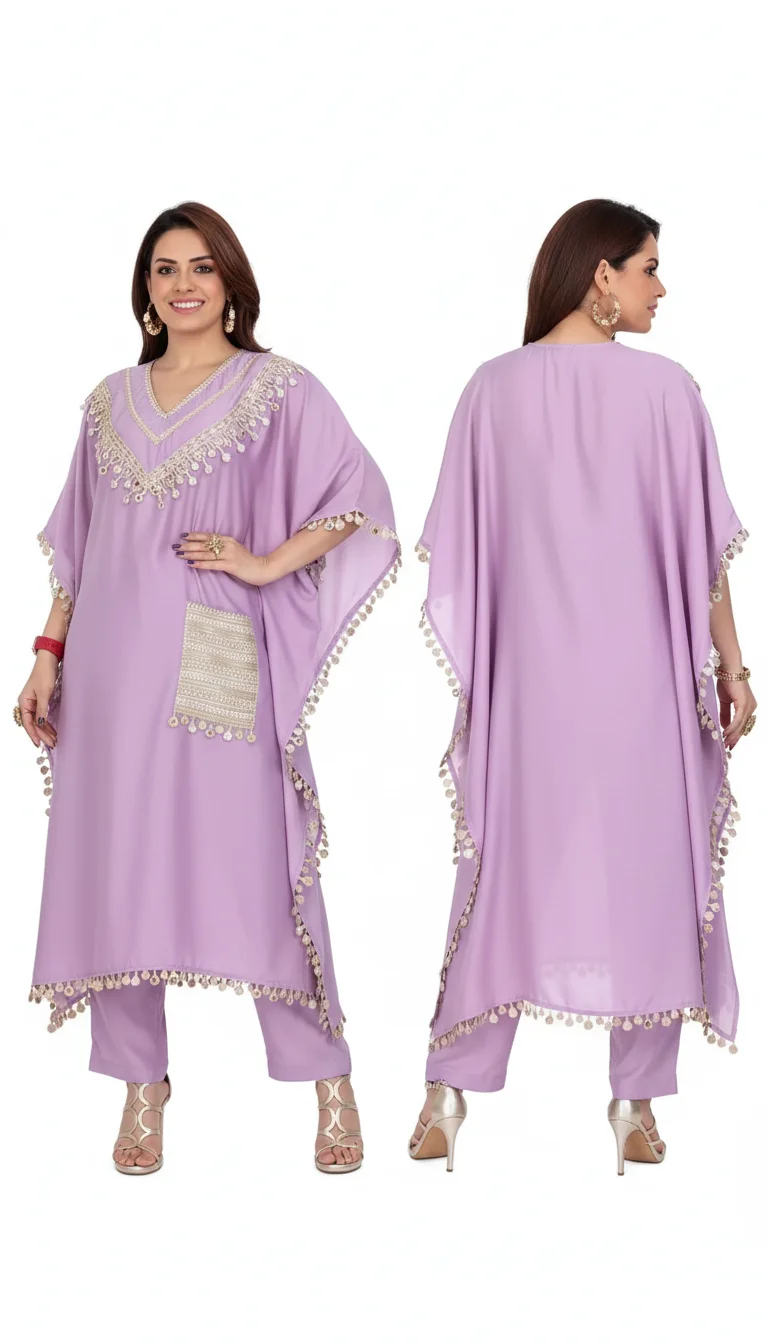
Lace borders soften the shine of mirrors and add a delicate touch. Pair with a plain dupatta to avoid overload.
Jewellery
Oxidised silver jewellery looks best with mirror work. Keep it minimal if the mirrors are dense.
Colours
- Bright colours like pink, orange and green for festivals.
- Black and white with silver mirrors for a modern look.
- Pastels with small mirrors for daytime events.
Care tips
- Hand wash gently or dry-clean.
- Do not twist or wring mirrored areas.
- Iron on the reverse side, avoiding the mirrors.
- Store with tissue paper so mirrors do not scratch other fabrics.
Common mistakes to avoid
- Mirror work with sequins and stones together. Too much shine.
- Machine washing. Mirrors can crack or loosen.
- Wearing near delicate fabrics. Mirror edges can snag.
- Heavy gold jewellery. Oxidised silver suits mirror work better.
Frequently asked questions
Where does mirror work come from?
It is strongly associated with Gujarat and Rajasthan, and is also found in other parts of India and neighbouring regions.
Is mirror work heavy?
Dense mirror work can add weight. Light mirror details are comfortable for daily wear.
Can mirror work kurtas be worn to the office?
Small mirror details on the neckline can work for festive office days.
How do I stop mirrors from scratching?
Store the garment with tissue paper or in a separate cotton bag.
Is mirror work good for Navratri?
Yes. It is a classic choice for garba and dandiya nights.
Fusion ideas
- Mirror work jacket over a white shirt and jeans.
- Mirror work dupatta with a solid kurta.
- Mirror work skirt with a crop top.
Three complete outfit examples
The Navratri night. Wear a V-neck mirror and lace work kurta with a flared palazzo, oxidised jhumkas, a silver hasli and mojaris. The mirrors catch the light beautifully as you dance.
The casual weekend. Choose a white kurta with small mirror details on the neckline, paired with blue jeans and kolhapuris. Add a sling bag for a relaxed look.
The fusion evening. Pair a mirror work jacket with a black slip dress or a white shirt and black jeans. Add block heels and silver earrings for a modern twist.
Supporting traditional artisans
Hand mirror work takes time and skill. Buying from craft cooperatives, fairs or brands that credit their artisans helps keep this tradition alive and supports the communities who practise it.
Choosing the right weight
Dense mirror work adds weight and shine, which suits festive nights. Light mirror details on the neckline or sleeves keep the garment comfortable for daily wear.
Care tips
Turn mirror work garments inside out before washing, wash gently by hand in cold water, and avoid wringing. Dry flat or on a hanger in shade.
In short: mirror work is a joyful craft that fits festive and fusion wear. Pair it with plain pieces, choose oxidised jewellery and handle it gently.