

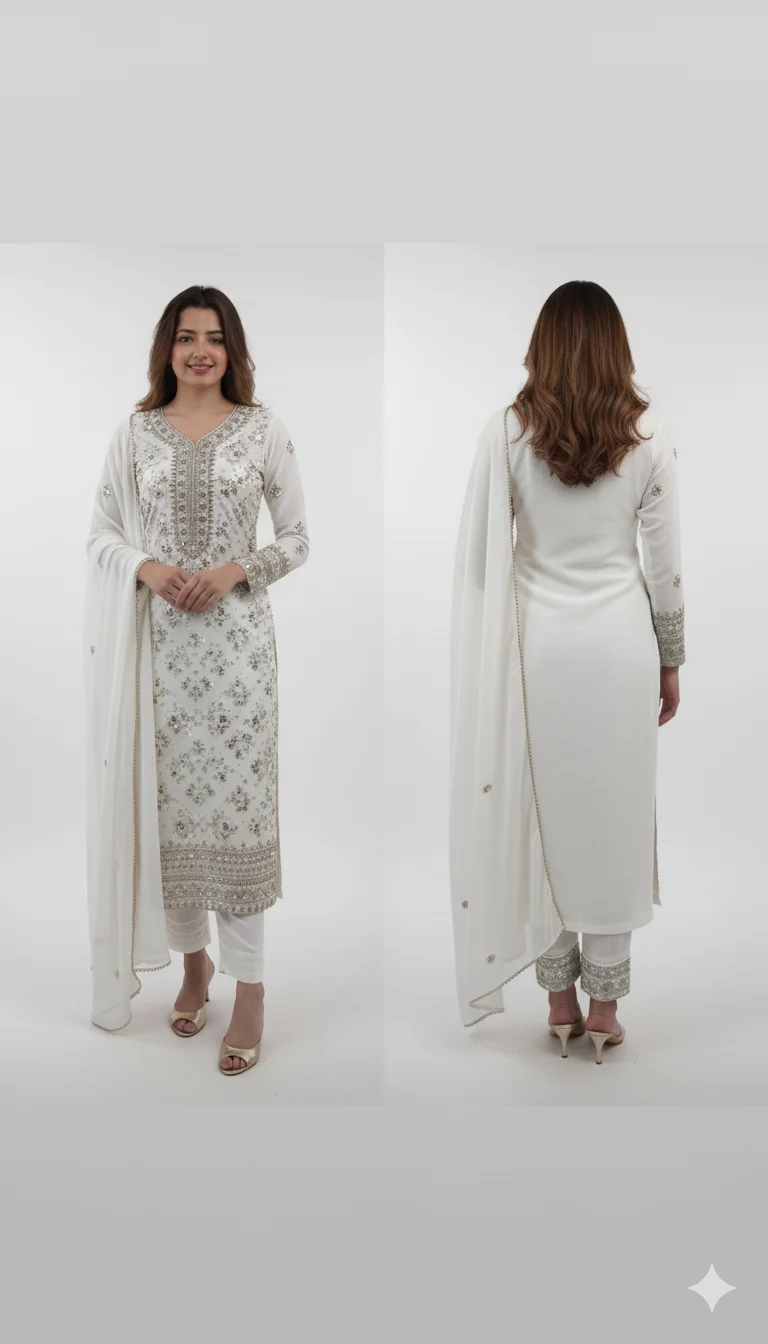

Organza is a crisp, sheer fabric with a gentle shine. It makes beautiful festive suits, but it is not the easiest fabric to stitch. Here is how to plan a semi-stitched or unstitched organza suit.
What makes organza different
- Sheer: always needs a lining.
- Crisp: holds shape and volume, but can feel stiff.
- Slippery edges: needs careful cutting and finishing.
- Shows seams: neat seam finishing matters because it may be visible.
Choosing a design
- A-line and anarkali cuts use organza’s crispness well.
- Straight cuts look elegant with embroidered borders.
- Sleeves: sheer organza sleeves with a lined body look modern.
Lining choices
- Cotton or shantoon: comfortable and breathable.
- Santoon or satin: smoother and dressier, but warmer.
- Choose a lining colour that matches or slightly contrasts the organza.
Measurements for your tailor
- Bust, waist and hip
- Shoulder and armhole
- Kurta length and sleeve length
- Neckline depth (front and back)
- Bottom length and waist
Tailoring tips
- Ask for French seams or neat edge finishing on visible areas.
- Keep extra seam allowance for future alterations.
- Use soft piping at the neckline and sleeve edges to stop fraying.
- Ask for a trial before final finishing.
Styling an organza suit
- Day events: pastel organza with a matching dupatta and pearls.
- Evening: dark organza with embroidery and statement earrings.
Care
- Dry-clean only.
- Store hanging or loosely folded; organza creases sharply.
- Steam, do not iron directly.
Common mistakes to avoid
- Cutting organza without a pattern trial. It frays easily; mistakes are costly.
- Using a heavy lining. It can make organza feel stiff and hot.
- Ignoring seam finishing. Raw edges show through sheer fabric.
- Ironing directly. Organza can scorch or shine.
Frequently asked questions
What is organza made of?
Traditionally silk, but most organza today is polyester or a blend, which is more affordable.
Is organza comfortable to wear?
With a soft cotton lining, yes. Unlined organza can feel scratchy.
Which design suits organza best?
A-line, anarkali and straight cuts with embroidered borders.
Can organza be worn in summer?
Yes, for day events, with a breathable lining.
How much fabric is needed for an organza suit?
Most dress material packs include enough for the kurta, bottom and dupatta. Check with your tailor before cutting.
Questions to ask your tailor
- Will you finish the seams so they look neat through the sheer fabric?
- Which lining do you recommend for comfort?
- Can you leave extra seam allowance?
- When can I come for a trial?
Three complete outfit examples
The festive day event. Have the organza material stitched into a straight kurta with embroidered borders. Pair it with straight cotton pants and the matching dupatta. Add pearl earrings and juttis for a fresh, elegant look.
The evening function. Ask for an A-line kurta with sheer organza sleeves and a lined body. Pair it with slim pants and statement earrings. The sheer sleeves look modern and dressy.
The wedding guest. Choose an anarkali cut using the full width of the organza for a dramatic flare. Add a cancan for volume, a kundan necklace and heels.
Planning the stitching timeline
Organza needs careful handling. Give your tailor at least one to two weeks, more during festive and wedding seasons. Plan a trial fitting to check the lining, sleeve fit and length before final finishing.
Lining colours that work
A lining in the same colour as the organza looks seamless. A slightly lighter shade can give a soft glow, and a contrast lining can create an interesting two-tone effect through the sheer fabric. Discuss options with your tailor using fabric swatches.
Storage tips
Organza creases sharply, so hang stitched suits in a garment bag or fold them loosely with tissue. Steam before wearing.
In short: organza needs a lining, careful seams and a good tailor. Plan the design, give full measurements and ask for a trial, and your organza suit will look elegant.