


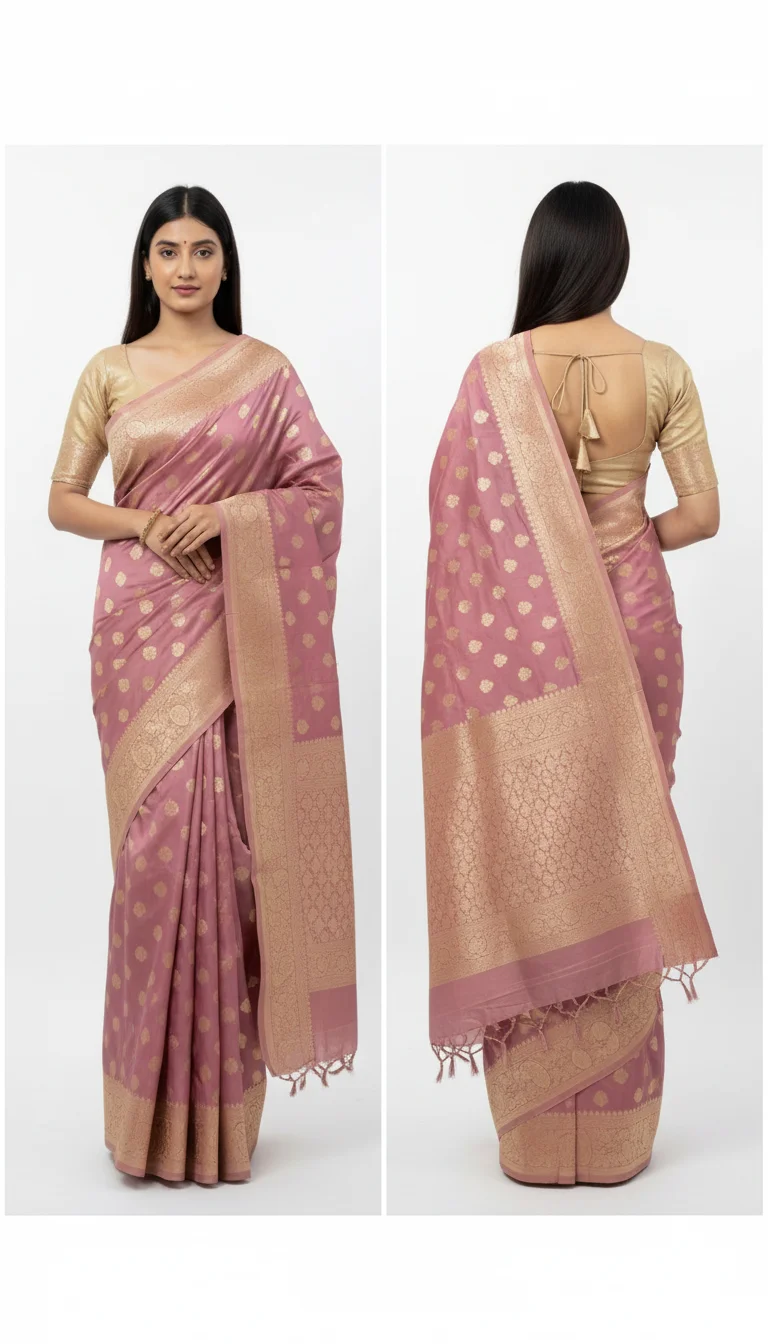

Patola is one of the most admired handloom textiles in India. Traditionally woven in Patan, Gujarat, a true Patola saree uses the double ikat technique, where both the warp and the weft threads are dyed in the pattern before weaving. The result is a sharp, symmetrical design that looks the same on both sides.
A little history
Patola weaving has been practised for centuries and was once traded across Southeast Asia. Pure double ikat Patola takes months to make, which is why it is precious and expensive. Today you will also find Patola-inspired designs in silk blends and printed fabrics, which make the look more affordable.
Real Patola vs Patola-style
- Double ikat (original): pattern is identical on both sides; edges of motifs look slightly feathered because of the tie-dye process.
- Single ikat (Rajkot Patola): only one set of threads is dyed, so the reverse is less sharp.
- Woven Patola-style silk blends: the pattern is woven with a jacquard or similar loom; more affordable and lighter.
- Printed Patola designs: the motif is printed on top; the reverse is plain or faded.
There is nothing wrong with Patola-style sarees as long as they are described honestly. Just know what you are paying for.
Common Patola motifs
- Narikunj (geometric lattice)
- Elephants, parrots and dancing figures
- Flowers in a grid pattern
- Bold borders with repeated shapes
Styling a Patola saree
For weddings
Choose rich colours like red, green or deep purple. Pair with a plain silk blouse in a colour picked from the saree’s border, and add gold or kundan jewellery.
For festivals
A Patola-style silk blend with an elbow-sleeve blouse, a simple choker and a low bun looks elegant and easy to manage.
Modern twist
Pair a Patola saree with a solid black or ivory blouse with a high neck, and keep jewellery to a statement earring.
Draping tips
- Silk-blend Patola is crisp; pleat it neatly and pin the pleats at the waist.
- Let the pallu fall open to show the pattern, or pleat it for a neater look at formal events.
Care tips
- Dry-clean silk Patola sarees.
- Store them wrapped in muslin, away from moisture and direct light.
- Refold every few months to prevent creases from becoming permanent.
Common mistakes to avoid
- Paying double ikat prices for a printed design. Ask the seller what technique is used and check the reverse side.
- Choosing a busy blouse. Patola patterns are bold; a busy blouse fights with them.
- Storing it in plastic. Silk needs to breathe; plastic can trap moisture.
- Spraying perfume directly on silk. It can leave stains.
Frequently asked questions
Why are real Patola sarees so expensive?
In double ikat, both warp and weft threads are tie-dyed to the exact pattern before weaving. Aligning them perfectly on the loom takes great skill and many weeks or months, which makes each piece valuable.
What is the difference between Patan Patola and Rajkot Patola?
Patan Patola is traditionally double ikat. Rajkot Patola is usually single ikat, where only one set of threads is dyed, so it is more affordable.
Can I wear a Patola saree to the office?
A lighter Patola-style silk blend in a softer colour can work for festive office days. Keep jewellery minimal.
Which blouse goes best with a Patola saree?
A plain silk blouse in a colour from the border is the classic choice. Black or gold blouses also work.
How should I store a Patola saree?
Wrap it in a soft muslin or cotton cloth, store it away from damp and direct light, and refold it every few months.
Jewellery ideas
- Gold temple jewellery for weddings.
- A simple gold chain and jhumkas for festivals.
- Oxidised silver for a modern, artistic look.
In short: real double ikat Patola is a rare handloom treasure, and Patola-style silk blends offer the same bold look for less. Choose a plain blouse and let the weave be the star.