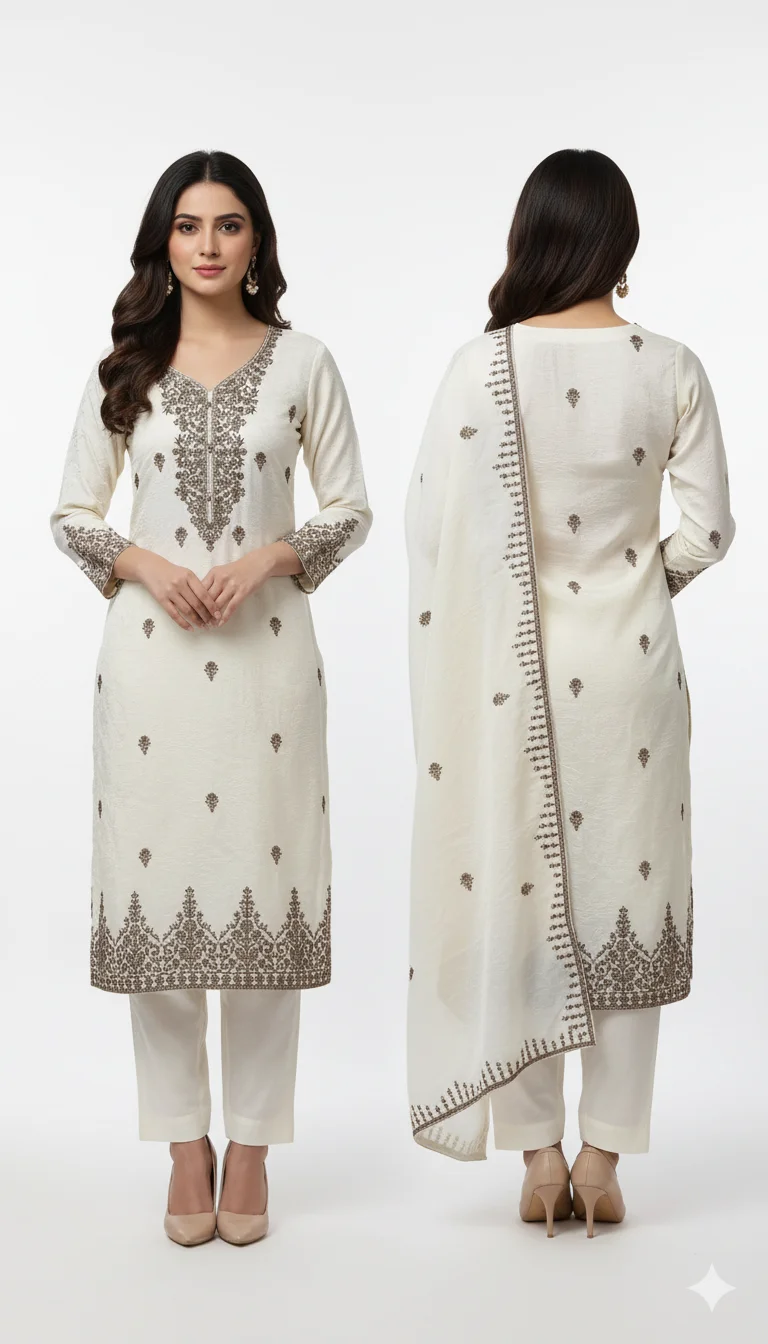

Kurtas are a comfortable and popular choice for office wear in India. With a few guidelines, they look as professional as any formal outfit.
Colours that work
- Neutrals: white, beige, grey, navy and black.
- Muted shades: olive, rust, dusty pink and teal.
- Save very bright colours for festive office days.
Prints and embroidery
- Small prints and subtle thread work look professional.
- Avoid heavy sequins, mirrors and large, busy prints for daily wear.
- Embroidery on the neckline only is a nice middle ground.
Fit and length
- Straight or slightly A-line cuts look neat.
- Knee length is the most versatile.
- Side slits up to the hip are fine; very high slits look casual.
- The kurta should not be tight across the bust or back.
Fabrics
- Cotton: breathable and crisp.
- Cotton blends: fewer wrinkles.
- Rayon: soft and drapes well.
- Linen blends: cool and smart.
Bottoms
Straight pants, cigarette trousers and narrow palazzos look professional. Leggings are better for casual settings.
Dupatta at work
Optional. If you wear one, choose a light, solid or small-print dupatta and drape it neatly on one shoulder.
Accessories
- A watch
- Small studs or hoops
- A structured tote bag
- Closed flats or loafers
Office kurta checklist
- Not see-through
- Ironed and crease-free
- Neat neckline
- Comfortable to sit in all day
Common mistakes to avoid
- Transparent fabrics without a lining. Always check in daylight.
- Very tight kurtas. They look less professional and are uncomfortable.
- Bright festival kurtas on regular workdays. Save them for celebrations.
- Wrinkles. Iron kurtas before work.
Frequently asked questions
Are kurtas acceptable in corporate offices?
In most Indian workplaces, yes, especially in neutral colours and simple designs.
Can men wear kurtas to work?
Many offices allow kurtas on Fridays or festive days. Check your dress code.
Should I wear a dupatta to work?
It is optional and depends on your comfort and workplace culture.
Which length is best for office kurtas?
Knee length is the most versatile.
What makes a kurta look professional?
A neat fit, muted colours, subtle prints, a crisp finish and minimal accessories.
Office capsule
- 2 neutral kurtas
- 2 subtle print kurtas
- 1 embroidered kurta for festive office days
- 3 straight pants in white, navy and black
Three complete outfit examples
The client meeting. Wear an ivory cotton kurta with tone-on-tone thread embroidery at the neckline, paired with navy straight trousers. Add loafers, a leather watch and small gold studs. Skip the dupatta or drape a light navy one neatly on one shoulder.
The regular workday. Choose a grey or olive straight kurta with a small block print and white trousers. Add flats, a tote bag and simple hoops. It looks fresh and professional without trying too hard.
The festive office day. Pick a maroon or mustard kurta with light thread embroidery and a printed dupatta. Add jhumkas and juttis. It feels festive while staying appropriate for work.
Dress codes in different workplaces
Creative and start-up workplaces are usually relaxed, so printed kurtas and jeans may be fine. Corporate offices and banks tend to prefer neutral colours, neat fits and trousers. Client-facing roles often call for the most formal choices. If in doubt, watch what senior colleagues wear and match that level of formality.
Keeping kurtas crisp all day
Iron the kurta the night before and hang it immediately. Choose cotton blends that crease less, carry a small lint roller and keep a spare dupatta at your desk in case of spills.
A simple rule
If you would hesitate to wear it to an important meeting, save it for the weekend. That rule keeps office kurtas consistently professional.
In short: muted colours, small prints, a straight fit and breathable fabric make a kurta perfectly office-ready. Keep accessories simple and the look stays professional.